Built to show you what food does, kalo is the best way to track nutrition.

A meal to log?
Start where you are.
A homemade lunch, a quick snack or dinner out. Choose the way that fits the moment.
-
Photograph the plate
Take a photo of your meal. Get an estimate of the foods, portions and macros to review.
-
Speak the meal
Say what you ate in your own words. Handy when your hands are busy or you’ve already finished eating.
-
Scan the barcode
Scan packaged food instead of searching for it. A quick way to log the yogurt, snack or protein bar in your bag.
One meal.
A clearer picture.
See the calories and macros together. A little more context for the food you eat.
Photo estimates are a starting point. Review the foods and portions before saving.
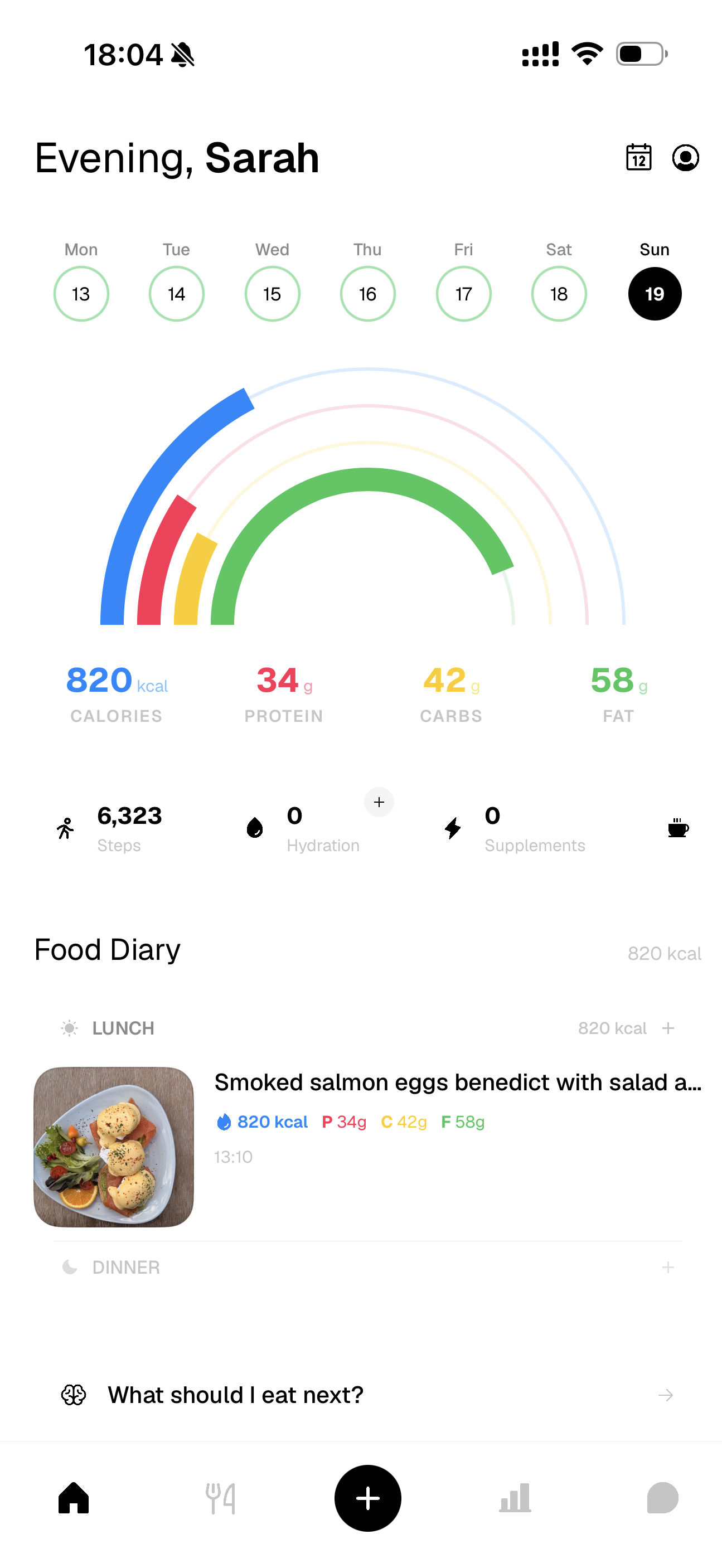
Smoked salmon eggs benedict
Example meal from kalo
- Calories
- 820 kcal
- Protein
- 34 g
- Carbs
- 42 g
- Fat
- 58 g
Less effort logging.
More room for your day.
See the whole day
Your food diary and daily macro arc bring calories, protein, carbs and fat into one view.
Keep it connected
Sync your nutrition with Apple Health so your meal data sits alongside the rest of your health information.
Make it your own
Use the numbers to understand your meals. You decide what changes, if anything, come next.
Your next meal.
A little more understood.
Available on iPhone. Includes in app purchases.